
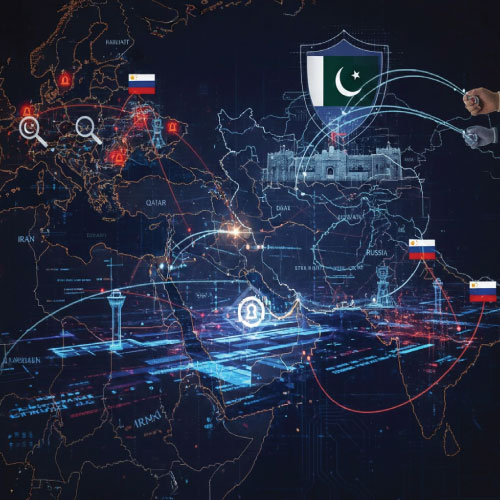
In contemporary time, digital frontier of societies is rapidly becoming as important as the physical boundaries. The recent disclosure of the Telegram channel “Diary of an Iranian Journalist” has sent shockwaves through Eurasian geopolitics. The channel alleges that over the past two decades, much of the software deployed in Iran, from civil registries and passport systems to airport infrastructure and even military hardware, was in fact developed or controlled by Israeli sources behind a façade of Indian programmers. These systems, according to the posts, had back doors that fed real-time information to Israel, thus allowing the remote monitoring of these systems and even operational interference. The story also states that the Gulf countries, such as the UAE, Saudi Arabia, Qatar, and Kuwait, had installed relatively tainted software, which exposed their whole entry and exit system to Israeli control. In the event that this was so, then such infiltration would not only be espionage, but a structural cession of technological autonomy.
What makes these charges especially volatile is that they implicate India as the complicit means by which Israel has found its way into a backdoor to the virtual realm of Iran. Indian programmers were used as a facade cover for Israeli systems in disguise. The report indicates that these enormous deceptions were revealed when Iranian intelligence, in collaboration with the Chinese and Russian had started investigating these networks within Iran. Which resulted in the major arrests and interrogation that led to the revelation of this huge trickery.
The technical aspect of implanting spyware or a backdoor by Israel is a possibility, and such aggressive cyber actions by Israel have been documented before. The leap of espionage on specific targets to the overall control of national systems is enormous, and requires evidence of the code origin, network logs, system updates, and chain-of-custody, none of which have been disclosed publicly. However, many of these parts happen to be true, as we have witnessed Indian have a history of spying for Israel most famous cases was where eight Indian Naval officers were caught spying for Israel in Qatar. Moreover, both have close defense, cyber, and intelligence collaboration. Gulf States must revisit their dependency on Indian technology and conduct regular audits of their critical infrastructure.
These developments are very pertinent for Pakistan, as we have seen close cooperation between India and Israel. They also highlighted the necessity of digital sovereignty. Pakistan needs to thoroughly implement cyber hygiene their own critical infrastructure, such that no backdoor or reliance on a foreign dependency can compromise its sovereignty. Cyber threat has become a problem in the country already: Pakistan witnessed a 35 percent growth in cyberattacks in 2025, and Kaspersky detected 16 million cyberattacks averting and almost a quarter of users affected. Its rate of cybercrime conviction is poor, just around 3.16 of the arrest leads to a conviction. In the meantime, Pakistan has only recently developed the National Cyber Emergency Response Team (PKCERT) to respond and coordinate responses to cyber incidents.
Second, With the Indian technological aura, being stained in some areas in the region, Pakistani (or Sino-Pakistani consortium) IT and cybersecurity companies might fill the void, presenting Gulf and regional countries with the so-called trusted options. The Pakistani policymakers may also enhance their collaboration with gulf countries in the field of cybersecurity, intelligence sharing, and technology, building on the bilateral trust and strategic intention. The locus of power is moving with software, away from tanks and missiles, towards code, networks, and trust. The stakes are high: the countries that manage their digital realm will be able to preserve their sovereignty; otherwise, they will become peripheral nodes of one more system. Pakistan must act rationally, it can have its time to strengthen its digital footprint and potentially increase its local presence as a reliable technological ally.
Author: M. Shahzad Akram, Research Officer, Center for International Strategic Studies AJK.
