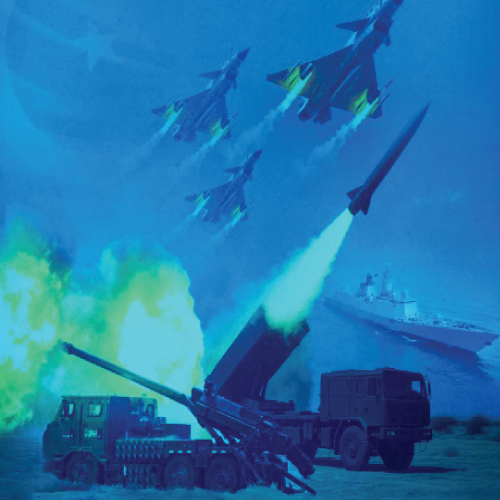
“Standing here today, in Azad Kashmir, is profoundly meaningful for me. This land, your land, has lived the history THAT the rest of Pakistan ONLY studies in books. The mountains around us are silent witnesses to decades of conflict, sacrifice, resilience, and dignity. And so launching Strategic Reckoning here, where the human consequences of every India–Pakistan crisis are felt most acutely, feels not only appropriate, it feels necessary.
This book is about the May 2025 crisis, but its heartbeat is Kashmir, because:
Every past crisis has been about Kashmir. Every future crisis will be about Kashmir.
I dedicate this book to the People of Kashmir
You have carried burdens that others only study.
You have buried dreams that others only debate.
And yet, you stand tall, dignified, unwavering, unbroken.
Your courage humbles me.
This book is not merely for policymakers or analysts.
It is also for you,
for every mother who sent her son across a checkpoint,
for every child who grew up without a father,
for every elder whose stories are drenched in both hope and heartbreak.
As long as injustice persists, instability will persist. As long as Kashmir remains disputed, peace will remain incomplete.
For 77 years, the people of Indian Illegally Occupied Jammu & Kashmir ( IIOJK) have lived under an occupation that is not only military, but ideological. An occupation shaped by a Hindutva mindset that sees land as sacred possession, and sees Kashmiri Muslims not as a people with rights but as a demographic obstacle to be diluted, suppressed, or erased.
This is not merely a political dispute.
This is not merely a territorial disagreement.
This is a people forced to live under the shadow of guns, laws, barricades, curfews, and demographic redesign, all engineered to break their spirit.
And yet, Kashmir has refused to break.
So Why I Begin With This?
Because the May 2025 crisis, the “4-Day War” did not happen in a vacuum.
It happened because India has normalized a mindset where:
- military force is the first option,
- escalation is a political tool,
- and war under the nuclear shadow is acceptable so long as it serves Hindutva nationalism.
This is the real lesson of May 2025.
India is trying to make war normal and Kashmir is its permanent battlefield.
Why This Book Was Needed?
Strategic Reckoning is a response to that dangerous new abnormal.
It documents how India’s actions, preemptive strikes, coercive doctrines, disinformation, and its militarized approach to IIOJK, have created a region where one misstep can ignite catastrophe.
This book is not simply analysis.
It is a warning.
It is a reckoning.
And it is a reminder that the heart of South Asia’s instability is Kashmir.
Takeaway 1: The Crisis Began Where All Crises Begin — IIOJK
Every chapter in this volume reconfirms what we in Azad Kashmir have always known:
There can be no stability in South Asia as long as IIOJK is illegally occupied and militarized and Kashmir is not resolved.
The Pahalgam incident, the spark India used to justify its aggression, happened in a place where repression has replaced governance.
IIOJK is not India’s internal matter.
It is the epicentre of every past conflict
and the starting point of every future one.
Takeaway 2: India Tried to Start a War; Pakistan Prevented One
The book proves something India hoped the world would not see:
- India’s actions in May 2025 were reckless, escalatory, and politically motivated.
- Pakistan’s response was mature, calibrated, and strategically disciplined.
- India endangered millions under the nuclear shadow; Pakistan prevented catastrophe.
- Pakistan’s restraint, not India’s threats, saved the region.
Takeaway 3: India Is Building a Permanent Crisis Machine And Kashmiris Are Its First Targets
What we call the “new abnormal” is India’s strategy of:
- preemptive strikes
- blurred nuclear thresholds
- AI-enabled rapid escalation
- narrative warfare
- and a domestic political logic that rewards crisis
This is not an accident.
This is not a miscalculation.
This is design.
And in India’s design, IIOJK is the laboratory.
The Most Dangerous Development: Demographic Engineering
After illegally revoking Article 370 on 5 August 2019, India imposed the new domicile law in 2020, allowing outsiders to claim IIOJK residency.
This was not administrative reform.
This was demographic warfare.
New settlers.
New voter rolls.
New majorities.
New realities created artificially.
And one day, India will turn to Pakistan and say:
“You wanted a plebiscite under UN resolutions? Fine.
Let’s vote.”
Imagine the cruelty.
After choking a population, barricading them, erasing their land rights, and flooding their home with settlers, India will claim “democracy.”
This is the final trap.
And we must see it clearly.
It is Pakistan’s Duty to declare, loudly and repeatedly, at every international forum:
Pakistan will not accept any demographic numbers beyond what existed before 5 August 2019.
Any electoral roll or population count after India’s domicile changes is illegitimate, engineered, and void.
This is how Pakistan must pre-empt India’s future deception.
Lastly, my tribute toevery contributor to this volume, our diplomats, scholars, military experts, and analysts, who helped capture the strategic truth of May 2025. I want to thank my incredible CSSPR team, Ali Zia Jaffery (who is also a contributing author to this book in addition to being the copy editor), Abdul Waris, Azka, and Muneeb. You are not just colleagues, you are the people I depend on, the ones who steady me when deadlines close in. This book carries your fingerprints as much as mine.
And my deepest gratitude to Lt. Gen. (Retd.) Khalid Kidwai, whose Preface is not merely an introduction but a strategic doctrine in itself, a reminder that Pakistan’s deterrence is responsible, but not passive; mature, but never submissive.
And finally to the people of Kashmir:
You have carried history’s heaviest burden
and yet retained your dignity.
You have lived through every crisis
long before it has reached the headlines.
And you know a truth the world keeps forgetting:
Kashmir is not a dispute. Kashmir is a nation under occupation.
India can live with the delusion of redrawing maps, rewriting laws, and replacing populations but it cannot erase a people.
This book, this crisis, and this conversation all point to one reality:
The future of South Asia will be written in Kashmir.
And it will not be written without Kashmiris.
Thank you.”
Author: Dr Rabia Akhtar, Dean, Faculty of Social Sciences, University of Lahore.
