With Pakistan increasing its civil nuclear program to achieve long term requirements of energy, one of the central questions arises. Is this growth sustainable in Pakistan without jeopardising the security of its people, its reputation internationally and without taking strategic risks? To a large extent, the solution lies with the Pakistan Nuclear Regulatory Authority (PNRA). Within a short span of twenty years, the PNRA has established itself as the backbone of the civil nuclear regime of Pakistan and has established the parameters within which the programme can be safely expanded.
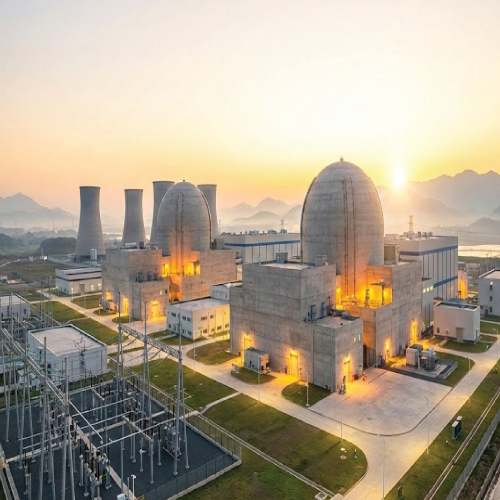
The nuclear profile of Pakistan is evolving. New power reactors are operational or in the process of construction. The spread of radiation technologies in the field of medicine, industry and research is going on. The nuclear facilities are moving towards digital systems and networked controls. This expansion is reflected in statistics. Pakistan currently has six nuclear power plants under IAEA safeguards, with a total capacity of over 3530 MW, compared to only 1,300 MW in 2017. Over 30 cancer-treatment centers in oncology alone utilize controlled equipment of radiation therapy in addition to the Pakistan atomic energy commission (PAEC) cancer care network. These changes render the role of PNRA more strategic than administrative.
PNRA regulates the nuclear sector of Pakistan. Its license is mandatory in every nuclear power plant, research reactor, industrial radiography equipment and medical radiation facility. The licensing process spans the entire life cycle of a facility. PNRA assesses the site, the design, the construction, the commissioning tests and finally the operating performance. This is demonstrated by the licensing of the new Hualong One reactors in 2024. Before issuing the construction approval, PNRA inspected their passive safety measures, hi-tech accident-management systems, and cybersecurity system. Its examination of K-3 prior to its commercial operation in 2023 contained about 312 planned, announced and reactive inspections. The processes align Pakistan with the way regulators in the United Kingdom (UK), China and South Korea license modern plants.
When a plant is operational, the work does not cease. PNRA inspectors perform planned and unannounced inspections, as well as specialised inspection of digital control rooms, reactor cooling and emergency diesel generators. Each year, PNRA receives and processes hundreds of operational reports in which minor incidents and near-misses are monitored. These data are used in risk-based inspection schedules, whereby more emphasis is given to higher-risk trends and not box-checking. In cases of poor performance, PNRA can impose corrective measures on the spot, limit operations or withdraw licenses. This deterrent effect is significant since operators are aware that PNRA has employed enforcement mechanisms in the past such as closure of unsafe radiology units and the dismissal of industrial radiography licenses.
In addition to the power plants, 2024 PNRA annual report shows that it controls 7543 radiation facilities in Pakistan. In 2024 alone it had carried out 2909 regulatory inspections on medical facilities. Such inspections have minimized the number of regulatory violations and increased compliance rates in radiology clinics, in which PNRA data indicates major progress in shielding practices and staff radiation monitoring in the past decade. This work is rarely shown in headlines but it has a direct influence on everyday life in the hospitals, construction sites, and industrial facilities.
Another fundamental area is emergency preparedness. PNRA operates the National Radiation Emergency Coordination Centre (NRECC) that serves as the national response centre to any nuclear or radiological event. It works with the plant operators, provincial authorities and health services to deal with nuclear and radiological emergencies. The center is also connected with Pakistan meteorological and environmental monitoring systems in order to monitor the plume dispersion in the event of an accidental release. In 2024, Pakistan hosted National Radiation Emergency Exercise (NREE-2024), and an IAEA ConvEx-2c exercise. ConvEx-2c was designed to evaluate the response arrangements in transnational radiological or nuclear events. The exercise was a test of national decision-making under elements of time pressure, cross-agency communication and real-time data sharing. Response of PNRA during the exercise demonstrated that interagency coordination was improved, which was also mentioned by the IAEA observers.
PNRA guarantees that civil nuclear programs in Pakistan are in line with the safeguards and transparency protocols demanded by its accords with IAEA. The civilian nuclear power programme of Pakistan including all power reactors and declared research reactors is under the IAEA safeguards. PNRA allows inspection, material accounting and reporting. The initial decision to place the Karachi units under safeguards was a deliberate policy decision which proves the separation of the civil and military domains.
Pakistan is signatory to the international conventions and treaties such as Convention on Nuclear Safety, Convention on the Physical Protection of Nuclear Material and its Amendment, Convention on Early Notification of a Nuclear Accident, Convention on Assistance in the Case of a Nuclear Accident or Radiological Emergency, and adheres to IAEA Code of Conduct on the Safety and Security of Radioactive Sources. Furthermore, its updated physical protection regulation, PAK/925, is well aligned with IAEAs INFCIRC/225/Rev.5 guidelines, which are generally recognized as a reference standard covering security of nuclear and radiological materials. Also, the regulation of PNRA, PAK/925 and related regulatory guidelines (e.g., PAK/926), include references to cyber security measures in protection of nuclear and radiological material.
The IAEA’s 2022 Integrated Regulatory Review Service follow-up mission found that Pakistan had implemented all 13 recommendations from its 2014 review while also addressed 29 out of 31 suggestions, significantly strengthening its regulatory framework. In its 2020 index, Nuclear Threat Initiative listed Pakistan as the most-improved among the countries possessing weapons-usable nuclear materials, citing the great strides in regulatory frameworks, particularly in physical protection, cybersecurity and insider-threat prevention. According to NTI, Pakistan improved its overall score by seven points. NTI indicated that Pakistan has gained seven points in its aggregate score.
A credible nuclear future also depends on people. PNRA has made a significant investment to develop human capital. Its National Institute of Safety and Security (NISAS) has now become a regional training centre. Since its designation as an IAEA Collaborating Centre in 2022, NISAS has expanded its training portfolio, hosting national and regional courses on radiation safety, physical protection, emergency response and nuclear security. Through its regulatory cooperation with Nigeria, where PNRA provides training and technical support, Pakistan is increasingly contributing to nuclear safety and regulatory capacity-building across the Global South.
Public engagement is becoming another pillar of PNRA’s work. It conducts awareness seminars on radiation safety, runs training for hospital technicians, and publishes guidance documents in accessible language. It has begun to move toward structured public consultation for new power projects, especially for environmental impact assessments. In 2024, PNRA and the IAEA conducted a national workshop on communication during nuclear emergencies. The focus was on ensuring factual, steady communication during crises, a challenge for any state in the era of fast-moving information and online speculation.
Looking forward, PNRA faces a more complex risk environment. Reactors are increasingly becoming digital. Climate stresses may affect water availability and site suitability. Global supply chains for nuclear equipment are becoming more competitive and less predictable. A regulator that stands still will fall behind. A regulator that adapts early can reduce these risks and support responsible growth.
PNRA appears to understand this. It is incorporating risk-informed approaches into inspections, modernising digital licensing systems, updating regulations in line with new IAEA standards, and strengthening institutional memory as senior experts retire. These are quiet reforms, but they will shape how Pakistan manages nuclear issues in the 2030s and beyond.
Pakistan’s civil nuclear future is not only about generating power. It is about building a system that is safe, secure and predictable. As PNRA marks its anniversary this year, its trajectory shows how regulatory strength has become one of Pakistan’s most important nuclear assets. The demands on the regulator will rise as the programme grows. Sustained political backing, resources and autonomy will matter as much as any new reactor.
Author: Maryyum Masood is working as Research Officer & Associate Editor at the Center for International Strategic Studies (CISS), Islamabad.
